
How Does Customs Clearance Handle Goods Subject To Quarantine Regulations?
So, you’ve just imported a shipment of goods, but there’s a catch – they’re subject to quarantine regulations. How does customs clearance handle this situation? Well, it’s a process that plays a crucial role in ensuring the safety and integrity of a country’s borders. Customs authorities work closely with quarantine departments to carefully inspect and evaluate the imported goods to prevent the spread of pests, diseases, and contaminants. In this article, we’ll take a closer look at how customs clearance tackles goods that require quarantine measures, highlighting the key steps involved and the necessary documentation needed for a smooth process.


Overview of quarantine regulations
Definition of quarantine regulations
Quarantine regulations are a set of rules and procedures implemented by governments to prevent the introduction and spread of pests, diseases, and invasive species into a country. These regulations aim to protect public health, agricultural industries, and the environment. Quarantine regulations apply to a wide range of goods, including plants, animals, food products, and other biological materials.
Purpose of quarantine regulations
The purpose of quarantine regulations is to reduce the risk of introducing or spreading pests, diseases, and invasive species that could have severe economic, environmental, and public health consequences. By enforcing quarantine regulations, customs clearance ensures that goods entering a country comply with the necessary health and safety standards, thereby safeguarding the country’s agriculture, ecosystem, and human population.
Types of goods subject to quarantine regulations
Quarantine regulations apply to various types of goods, including but not limited to, live animals, animal products, plants and plant products, fruits and vegetables, seeds, soil, timber, biological materials, and certain types of chemicals. These goods are subject to quarantine procedures to ensure they do not carry pests, diseases, or invasive species that could harm the country’s agriculture, environment, or public health.
Importation process for goods subject to quarantine regulations
Submission of required documentation
When importing goods subject to quarantine regulations, the first step is to submit the necessary documentation to the customs authorities. This documentation usually includes a quarantine entry, which provides detailed information about the imported goods, such as the type, quantity, origin, and intended use. Additionally, supporting documents, such as certificates of origin, phytosanitary certificates, and permits, may also be required depending on the nature of the goods.
Pre-shipment requirements
In some cases, exporters or importers may need to comply with pre-shipment requirements to ensure the goods meet the necessary quarantine standards. These requirements may include treatments, inspections, or testing of the goods prior to shipment. For example, certain plants or plant products might need to undergo fumigation, irradiation, or treatment with specific chemicals to eliminate any potential pests or diseases.
Customs declaration and assessment
Upon arrival at the point of entry, the customs authorities examine the imported goods and verify the accuracy of the submitted documentation. They assess the value, classification, and duty payable for the goods in accordance with the customs laws and regulations. Customs officers collaborate closely with quarantine officers to ensure compliance with quarantine regulations. If the goods are found to be subject to quarantine regulations, they are referred to the quarantine authorities for further inspection and assessment.
Inspection and quarantine procedures
Initial inspection at the point of entry
Upon referral from the customs authorities, the goods undergo an initial inspection at the point of entry. Quarantine officers visually inspect the goods and assess the level of risk they pose in terms of pests, diseases, or invasive species. Depending on the nature of the goods and the perceived risk, the officers may conduct further inspections or sampling.
Quarantine risk assessment
Quarantine risk assessment is a critical step in determining the potential threats associated with the imported goods. Quarantine officers evaluate the likelihood of pests or diseases being present in the goods, their potential impact on agriculture or public health, and the effectiveness of any pre-shipment treatments. This assessment helps in deciding the next course of action, such as whether or not to conduct physical inspection or sampling.
Physical inspection and sampling
If deemed necessary, quarantine officers may proceed with a physical inspection of the goods. This inspection involves a detailed examination of the goods, looking for visual signs of pests, diseases, or other abnormalities. Additionally, officers may take samples from the goods for laboratory testing to identify any hidden pests or diseases that may not be immediately visible. The results of these inspections and tests play a crucial role in determining the quarantine clearance outcomes.
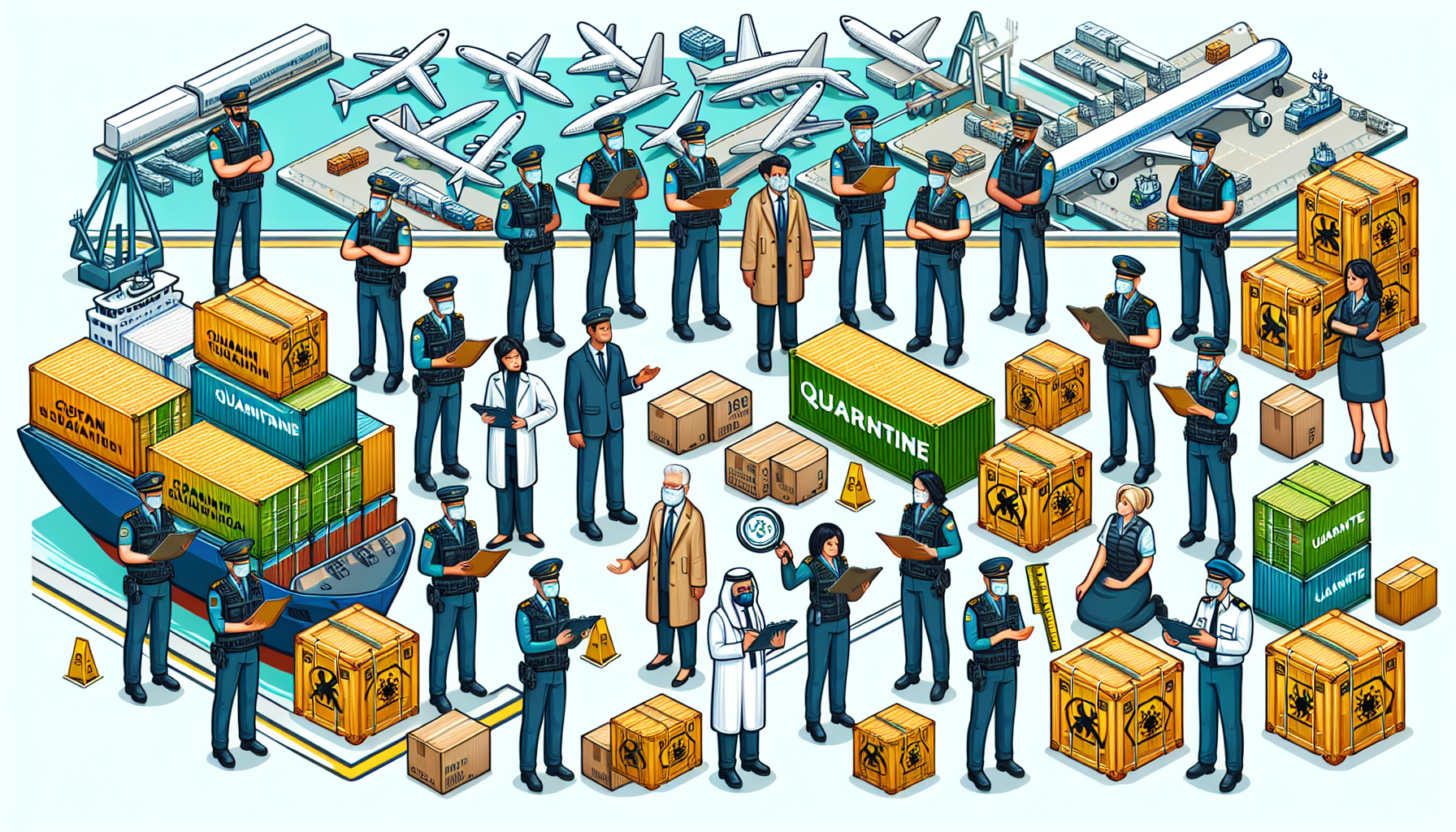

Quarantine clearance decision-making
Determining compliance with quarantine regulations
Once the inspection and assessment processes are completed, quarantine officers determine the compliance of the imported goods with the quarantine regulations. They compare the findings from inspections, laboratory tests, and risk assessments against the applicable quarantine standards. If the goods meet the required standards, they are cleared for release. However, if non-compliance is detected, further actions will be taken to ensure appropriate measures are followed.
Issues that may arise during the assessment
During the assessment process, several issues may arise that require careful consideration. For example, goods may be found to be infested with pests or infected with diseases, posing a risk to the country’s agricultural sector. In such cases, the quarantine officers need to determine the appropriate course of action, which may involve treatment, sterilization, or even destruction of the goods. Similarly, issues related to inadequate documentation or non-compliance with specific quarantine requirements need to be addressed in a timely and effective manner.
Quarantine clearance outcomes
Based on the assessment findings, quarantine clearance outcomes can vary. If the goods are found to be compliant with the quarantine regulations, they are granted clearance and released for entry into the country. In some cases, additional conditions or restrictions may be imposed to mitigate any residual risks. However, if the goods are deemed non-compliant or present a significant risk, they may be subject to treatment, disinfection, or destruction in accordance with the quarantine procedures and relevant laws.
Quarantine compliance requirements
Treatment or disposal of non-compliant goods
When non-compliant goods are detected during the quarantine process, appropriate measures need to be taken to ensure that the risks they pose are effectively eliminated. Depending on the nature and severity of the non-compliance, options may include treatment, such as fumigation, or disposal methods, such as incineration or deep burial. These measures are implemented to prevent the introduction or spread of pests, diseases, or invasive species that could threaten public health, agriculture, or the environment.
Quarantine release and certification
Once non-compliant goods have been appropriately treated or disposed of, the remaining compliant portion of the shipment may be released, subject to the completion of any necessary requirements. Quarantine officers issue a release notice or certificate to confirm that the goods have satisfied the quarantine regulations and are safe to enter the country. This certification facilitates the smooth movement of goods through the customs clearance process.
Requirements for specific types of goods
Certain types of goods may have unique quarantine compliance requirements due to their inherent risks or characteristics. For example, the importation of live animals may require additional documentation, veterinary inspections, and quarantine periods to minimize the risk of introducing infectious diseases. Similarly, the importation of plant materials may be subject to inspections for pests, diseases, or invasive weeds that could harm agricultural crops or natural habitats. Understanding and adhering to these specific requirements is crucial to ensure successful quarantine clearance.
Role of quarantine officers
Responsibilities and qualifications of quarantine officers
Quarantine officers play a crucial role in enforcing quarantine regulations and protecting a country from the entry and spread of pests, diseases, and invasive species. They are responsible for conducting inspections, assessments, and surveillance activities to detect and manage quarantine risks. These officers often possess specialized knowledge and training in areas such as veterinary science, plant pathology, entomology, and risk analysis to effectively carry out their duties.
Training and certification
Quarantine officers undergo comprehensive training programs to acquire the necessary skills and knowledge required for their roles. Training may cover topics such as pest and disease identification, inspection techniques, risk assessment methodologies, and understanding the relevant quarantine regulations. Certification programs ensure that officers meet the required standards and maintain the highest level of professionalism and competence in their work.
Collaboration with other agencies
Quarantine officers work closely with various government agencies, such as customs, agriculture, health, and environmental departments, to facilitate effective coordination and cooperative efforts in enforcing quarantine regulations. This collaboration allows for the exchange of information, joint inspections, and the pooling of resources and expertise. By working together, these agencies can enhance the efficiency and effectiveness of the quarantine clearance process, ensuring the protection of public health, agriculture, and the environment.

Collaboration between customs and quarantine authorities
Information sharing and coordination
Customs and quarantine authorities collaborate closely to ensure a seamless and coordinated approach to enforcing quarantine regulations. They share information about imported goods, including the quarantine entry, customs declaration, and any relevant supporting documents. This exchange of information enables better risk profiling and identification of goods that require quarantine inspections. Timely and accurate information sharing between these authorities is vital to the successful implementation of quarantine clearance processes.
Joint inspections and risk profiling
Customs and quarantine authorities may conduct joint inspections to ensure compliance with both customs and quarantine regulations. By combining their expertise and resources, these agencies can identify goods of high-risk and prioritize inspections accordingly. Joint inspections also facilitate the efficient processing of goods by reducing duplication of efforts and streamlining procedures. Effective risk profiling allows for more targeted and efficient use of limited resources in addressing potential quarantine risks.
Customs penalties for non-compliant goods
Customs authorities may impose penalties or fines for the importation of non-compliant goods, including those that do not meet the quarantine regulations. These penalties serve as a deterrent against the importation of prohibited or high-risk goods and provide incentives for importers to comply with the necessary quarantine requirements. Customs penalties contribute to the overall effectiveness of the quarantine clearance process by ensuring compliance and deterring potential risks.
Emerging technologies in quarantine clearance
Electronic documentation and risk assessment
The use of electronic documentation systems streamlines the quarantine clearance process by facilitating the submission, processing, and storage of various documents electronically. Electronic systems allow for efficient tracking and retrieval of information, reducing paperwork and administrative burdens. Additionally, electronic risk assessment tools enable the automated evaluation of goods based on pre-defined criteria, improving the accuracy and speed of risk profiling.
Use of artificial intelligence and data analytics
Artificial intelligence (AI) and data analytics have the potential to revolutionize quarantine clearance processes. AI algorithms can analyze large volumes of data, including historical inspection records, import trends, and disease outbreak information, to identify patterns and make predictions. This enables more targeted inspections and risk management strategies. Data analytics can also identify areas of improvement and guide policy decisions by providing actionable insights based on real-time data and trends.
Enhanced tracking and tracing systems
The advent of advanced tracking and tracing systems provides valuable tools to monitor the movement of goods subject to quarantine regulations. These systems utilize technologies such as barcodes, RFID tags, and GPS tracking to capture and transmit real-time data on the location, condition, and handling of goods. Improved visibility and traceability enable faster and more accurate identification of potential risks, enhancing the overall efficiency and effectiveness of the quarantine clearance process.
Challenges and solutions in handling goods subject to quarantine regulations
Complexity of quarantine requirements
Quarantine requirements can be complex and vary depending on the type of goods and the country of importation. Importers may struggle to navigate through the regulations and understand their specific obligations. To address this challenge, authorities should provide clear and readily accessible information on quarantine requirements, engage in regular stakeholder consultations, and offer educational programs and resources to assist importers in complying with the regulations.
Timelines and delays in clearance process
Timelines and delays in the quarantine clearance process can pose challenges to importers, especially when goods are time-sensitive or perishable. Delays may occur due to the need for additional inspections, laboratory testing, or the resolution of non-compliance issues. To minimize delays, authorities should establish efficient and transparent processes, prioritize inspections based on risk assessments, leverage technology to speed up documentation and data processing, and collaborate with other agencies to expedite the clearance process.
Risk mitigation strategies
Managing quarantine risks effectively requires the implementation of robust risk mitigation strategies. These strategies should focus on prevention, early detection, and rapid response to potential threats. Importers can adopt measures such as sourcing goods from reputable suppliers, ensuring proper packaging and labeling, and undergoing pre-shipment treatments where required. Collaboration among quarantine authorities, customs, and other relevant agencies is crucial in developing and implementing risk mitigation strategies that address specific challenges and safeguard public health, agriculture, and the environment.
International cooperation and standardization
Harmonization of quarantine regulations
International cooperation plays a vital role in harmonizing quarantine regulations across countries. Harmonization efforts aim to develop standardized measures, procedures, and documentation requirements for goods subject to quarantine regulations. By aligning their regulations with international standards, countries can facilitate trade, reduce duplication of efforts, and enhance the efficiency of the quarantine clearance process. Harmonization also ensures a consistent level of protection against pests, diseases, and invasive species globally.
Bilateral and multilateral agreements
Bilateral and multilateral agreements between countries contribute to the effective management of quarantine risks. These agreements foster cooperation, information exchange, and mutual recognition of quarantine measures. By establishing clear protocols and frameworks, countries can streamline their quarantine clearance processes for goods traded between them. Bilateral and multilateral agreements promote international trade while minimizing the risk of introducing and spreading pests, diseases, and invasive species.
International best practices
Sharing and adopting international best practices in quarantine clearance promotes continuous improvement and increases the effectiveness of procedures. Countries can learn from each other’s experiences, successes, and challenges to develop more efficient and risk-based approaches. Collaboration through international organizations and forums allows for the exchange of knowledge, capacity building, and the development of common guidelines and standards. Implementing international best practices strengthens global quarantine systems and contributes to a safer and more sustainable trade environment.
In conclusion, customs clearance plays a crucial role in handling goods subject to quarantine regulations. From submission of required documentation to inspection and risk assessment, customs officers collaborate with quarantine authorities to ensure compliance with quarantine regulations. Through effective cooperation, utilization of emerging technologies, and adherence to international standards, customs clearance contributes to protecting public health, agriculture, and the environment from the risks associated with the international movement of goods.
