
How Can I Avoid ISF Penalties For Clothes Racks And Rails
?Are you serious about letting a sloppy ISF ruin your shipment of clothes racks and rails and waste your time and money?
How Can I Avoid ISF Penalties For Clothes Racks And Rails
You need a blunt, actionable plan. The U.S. Importer Security Filing (ISF, often called “10+2”) is unforgiving when you file late or wrong — especially for bulky, mixed-material items like clothes racks and rails where classification, manufacturer identity, and stuffing location often get messed up. This article tells you exactly what to do, step by step, so you don’t get fined or stranded at the dock.

What ISF actually requires (basic definitions and requirements)
You must file the ISF at least 24 hours before the cargo is laden aboard the vessel at the foreign port. The ISF requires specific data elements the importer (or its agent) must provide; carriers must provide two additional data elements. If any of the required fields are missing, incorrect, or submitted late, CBP can assess penalties — typically up to $5,000 per violation and potentially more if you keep screwing up.
Key importer data you must supply:
- Seller (or owner) name and address
- Buyer (or owner) name and address
- Importer of Record number or EIN (or “Alternative” importer)
- Consignee number and address
- Manufacturer (or supplier) name and address
- Ship-to-party (if different from consignee)
- Country of origin of the goods
- Commodity HTSUS number (or best approximate)
- Container stuffing location (where the container was stuffed)
- Consolidator (stuffer) name (or “Unknown” only if truly unknown)
Carrier-provided elements (the “+2”):
- Vessel stow plan/Container status messages
- Bill of Lading number and arrival details
Why clothes racks and rails create ISF headaches
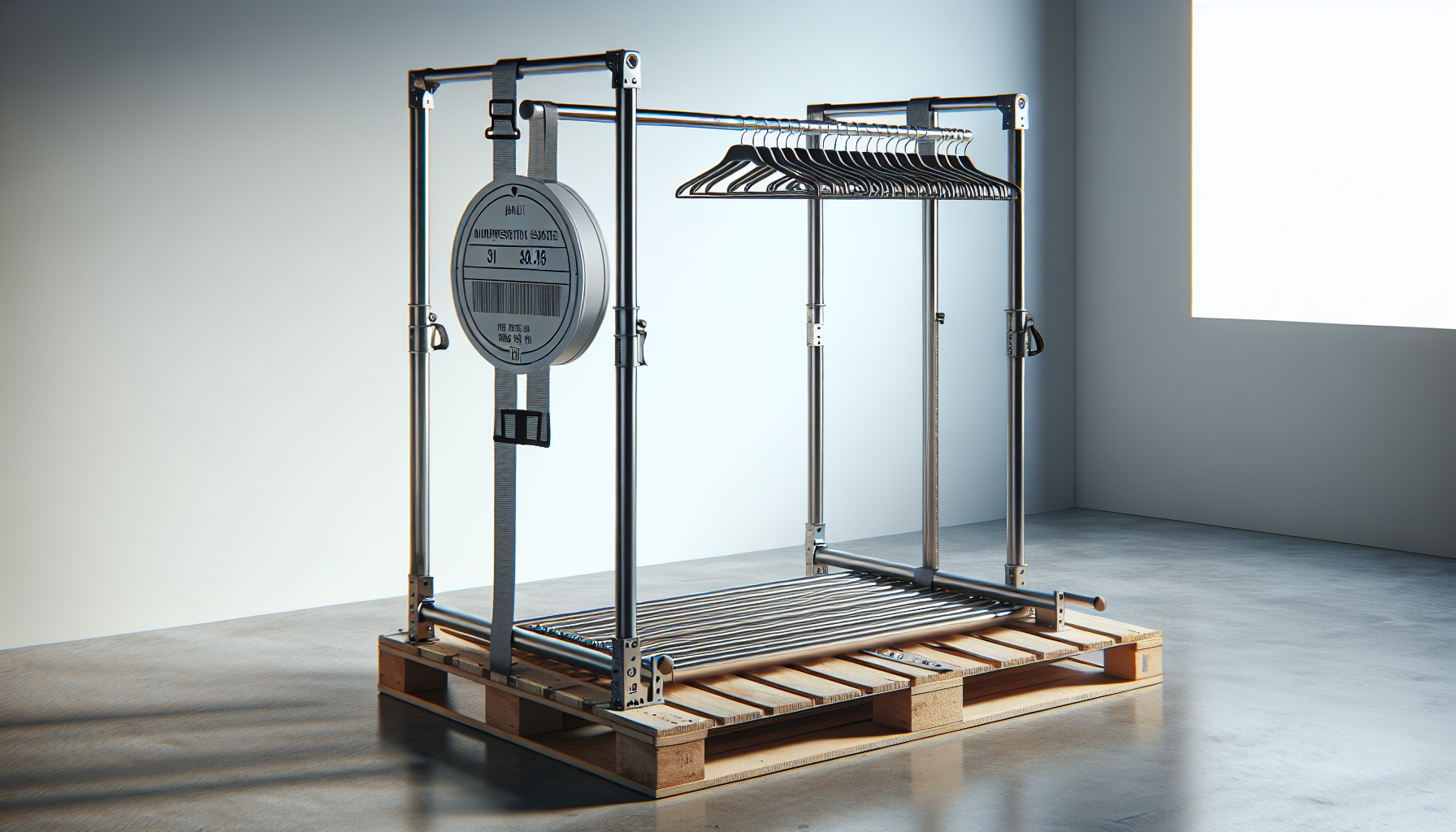
You’re dealing with mixed-material shipments: metal rails, hangers, assembled fixtures, and sometimes apparel on hanger racks (GOH — garments on hanger). That means:
- HTS classification confusion: rails could be classified as furniture parts, metal household articles, or accessories — and one wrong 8-digit HTS can trigger an ISF discrepancy.
- Multiple suppliers/manufacturers: parts might be made in different locations, then assembled at a third site. CBP wants the manufacturer; if you list the assembler instead of the piece manufacturer, it can be treated as inaccurate.
- Stuffing location ambiguity: if you use a CFS (container freight station), the stuffing location is the CFS, not the manufacturer.
- Consolidated shipments: if your racks and rails are part of a consolidation, the consolidator’s identity and container stuffing info must be precise. You must get every one of these right before filing. No excuses.
Expertise Depth
You need a system, not hopeful guessing. Work with customs brokers experienced in apparel fixtures and hardware. Demand accurate supplier declarations and photos of container stuffing. If you’re handling ISF yourself, learn the nuances of HTSUS subheadings relevant to metal fixtures vs apparel hardware, and set up repeatable processes for your suppliers to deliver correct data.
Complete, start-to-finish process (including edge cases and compliance tips)
Follow this sequence; don’t skip steps:
-
Lock down the parties and roles
- Confirm importer of record, consignee, buyer, and seller identities and addresses.
- Require suppliers to affirm manufacturer identity with a signed declaration that lists parts and their countries of origin.
-
Determine country of origin for each SKU
- For assembled racks, country of origin is where the final substantial transformation occurs. If parts are made in Country A and final assembly in Country B that changes origin — and CBP will expect the assembler/manufacturer name.
-
Classify the goods accurately
- Use HTSUS codes consistent with the product’s material and function. Don’t fake a temporary “9999” placeholder. If you must estimate, document your logic and amend ASAP.
-
Identify container stuffing location precisely
- If stuffed at a factory, list factory location. If stuffed at a CFS, list CFS name and address. If stuffed in multiple sites, work with your consolidator to capture the actual stuffing address for the container.
-
Confirm consolidator or stuffer
- The consolidator is often the party responsible for stuffing the container. If the manufacturer stuffed it, they’re the consolidator for ISF purposes. Get that in writing.
-
File the ISF on time and verify acceptance
- File at least 24 hours prior to lading. Get acceptance status and verify no errors. If the carrier or broker reports reject codes, fix them immediately.
-
Prepare for arrival and amendments
- If an error is found but the vessel hasn’t sailed, correct it before lading. If the vessel has sailed and you must amend, do it immediately and keep documentation showing you tried to correct it.
Edge cases and how to handle them:
- Multiple manufacturers or parts from multiple countries: Document each part’s origin and the logic for a single country of origin if final assembly causes substantial transformation. If you can’t legally assert a single country, call a customs expert.
- GOH (garments on hanger) with racks attached: Treat the racks as fixtures if shipped with garments. You might need to list multiple HTS entries and ensure manufacturer declarations for both apparel and metal fixtures.
- LCL shipments: The consolidator or CFS is often the stuffer. Get a stuffing certificate and confirm they’ll supply the stuffer’s identity for ISF.
- Transshipment / intermediate ports: ISF filing is based on where the cargo is loaded on the ocean vessel bound for the U.S., so don’t confuse final destination with the loading port. File based on the foreign port where the cargo is laden.
User Journey Completion (how the process should look from start to finish)
You start by locking supplier data, then move to classification and stuffing confirmation, then submit ISF, then monitor acceptance, and finally prepare arrival docs. Each step must have a check and a deadline. Here’s a practical workflow you should enforce:
- T minus 14-10 days: Supplier sends product spec, manufacturer, and origin declaration.
- T minus 9-7 days: You confirm HTS codes and stuffing plan with consolidator.
- T minus 6-3 days: Consolidator confirms stuffing location and container numbers.
- T minus 24+ hours before vessel lading: File ISF and confirm “accepted” status.
- Post-filing: Re-check documents, retain copies for five years, and be ready to amend if CBP flags an issue.
Fresh Perspective Value (practical shortcuts that actually work)
Stop relying on verbal promises. Force your suppliers to sign a template “Manufacturer and Country of Origin Declaration” that includes an attestation they are the manufacturer and the exact address used for container stuffing. Demand digital photos of packed containers showing product and markings — that evidence saves you when CBP questions stuffing location or manufacturer.
Also:
- Use standardized item master fields that your broker can map directly to ISF fields.
- Put ISF deadlines into your vendor terms and shipping schedules with penalties for late supplier documentation.
- Build a short FAQ for factories and consolidators listing exactly what you need and how to label boxes.
Common mistakes that trigger penalties (and how to avoid them)
- Missing or incorrect manufacturer information: Fix it by contractually obligating suppliers to identify the true manufacturer.
- Wrong stuffing location: Obtain a stuffing certificate from the party who physically stuffed the container.
- Incorrect HTS: Hire a classification expert or work with your customs broker; don’t guess.
- Late filing: Build a calendar tied to sailing dates; no one files at the last minute anymore.
- Using “unknown” placeholders casually: Only use “unknown” when you truly don’t know; document attempts to get information and amend ASAP.
What to do if CBP issues a penalty
- Don’t ignore it. That’s how penalties balloon.
- Gather evidence: emails, declarations, photos, bills of lading, and proof of timely submission attempts.
- Contact your customs broker and legal counsel. Consider requesting mitigation or reconsideration; CBP sometimes reduces penalties for first-time errors when you show a compliance program.
- Fix the underlying process: if the issue was supplier data, update contracts and penalties; if it was filing practice, change your workflow immediately.
Compliance tips that actually prevent fines
- Retain all ISF-related records for five years.
- Use a customs broker with proven apparel and hardware experience. If you outsource, audit them.
- Conduct periodic audits of supplier declarations and stuffing certificates.
- Maintain an ISF incident log so repeat mistakes get corrected systematically.
- Use container photos and third-party stuffing attestations for high-risk shipments.
Practical checklist you can use tonight
- Confirm manufacturer name/address and get signed declaration.
- Confirm country of origin for every SKU.
- Finalize HTSUS numbers and documentation for any alternatives.
- Confirm actual container stuffing location and get photos/stuffing certificate.
- Confirm consolidator or stuffer identity and contact details.
- File ISF at least 24 hours before lading and verify acceptance.
- Retain all supporting docs for five years.
Final blunt advice
You will not win fights with CBP by winging it. Clothes racks and rails are exactly the kind of shipments that show up on CBP’s radar: mixed materials, multiple suppliers, and confusing stuffing scenarios. You must be relentless about documentation, deadlines, and supplier accountability. If you can’t build that yourself, hire a competent customs broker or ISF service and hold them accountable.
If you want a hands-off option that still keeps you compliant and angry-free, consider a reputable ISF service that specializes in apparel and fixtures; for example, ISF Expedite – Trusted ISF Filing and Customs Support can handle accurate filings and keep you from footing the penalty bill for sloppy data.